
The T20 framework: the 20 skills that actually carry CAT Quant
Most aspirants approach CAT Quant by topic. They study percentages, then ratios, then arithmetic progressions, then geometry, ticking off chapters in the order they appear in a textbook. By month four they have covered the whole syllabus and feel competent. Then they take a mock and score 75 percentile. The issue is not gaps in topic coverage — it is gaps in the underlying skills that span topics.
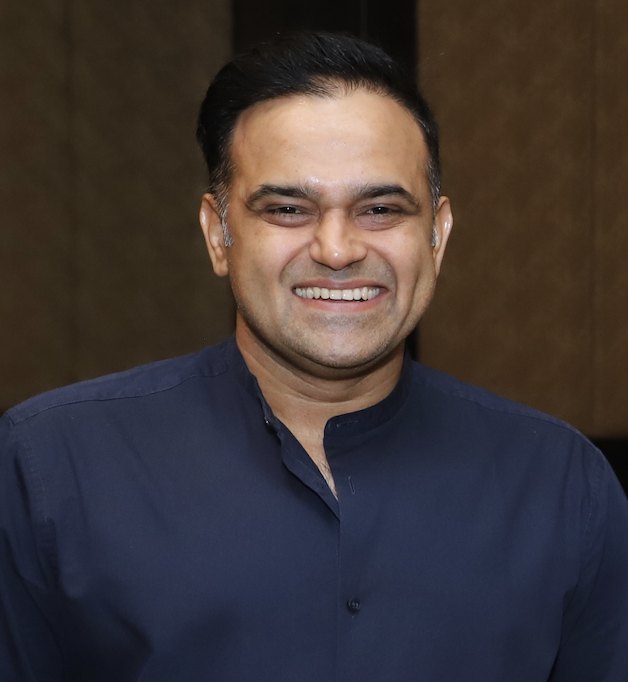
Tony Xavier’s book identifies what he calls the T20 — twenty skills that, properly trained, carry roughly 80% of CAT Quant performance. Most of them aren’t named in any conventional syllabus. They cut across chapters. Mastering them produces a different kind of CAT QA prep — one where speed and accuracy compound together rather than trading off against each other.
The principle behind the T20
Look at a sample of CAT Quant questions across the last 10 years. You won’t find one question that purely tests “arithmetic progressions” or “simple interest.” What you’ll find is questions that combine 2–4 skills — say, percentage shift + ratio manipulation + interpretation of a word problem. The questions are not testing your topic mastery. They are testing whether you can deploy the underlying skills together at speed.
This means the way you practice has to change. Practicing “percentages questions” in a chapter-specific way is much weaker than practicing “percentage shifts as a recurring skill across mixed questions.” The first builds knowledge. The second builds reflex.
The 20 skills, grouped by frequency
Saurabh Mundra — our QA specialist at IMS Indore (99.99 percentile in QA across CAT and XAT) — frames the T20 as four groups by frequency in actual CAT papers. Practice density follows frequency.
Group A — Highest frequency (deploy in 60%+ of QA questions)
- Mental calculation speed. Doing 12% of 850 in your head in under 3 seconds. Multiplications, divisions, percentages without writing them down. Saves 15–20 seconds per question.
- Approximation discipline. Knowing when to compute and when to estimate. “Roughly 14% of 750” is enough for 80% of answer-elimination work.
- Ratio manipulation. Converting between ratios, scaling them, comparing them. Underlies arithmetic, mixtures, partnerships, time-and-work, time-speed-distance — five major topic areas.
- Percentage shift fluency. Converting between “increase by 20%” and “multiply by 1.2.” Knowing the percentage equivalents of common fractions. Reading compound increases without re-deriving the math.
- Equation framing. Translating a word problem into one or two equations correctly. This is the single biggest leak — students who get this wrong waste 4–6 minutes per question on a wrong setup.
Group B — High frequency (deploy in 30–50% of questions)
- Linear equation solving under pressure. Two equations, two unknowns, solve in 30 seconds. Not symbolic math — operational arithmetic.
- Quadratic equation behavior. Knowing when a quadratic has real roots, when both are positive, when their sum or product matters. Most questions don’t need you to factor — they need you to read the structure.
- Number-system intuition. Divisibility, factors, last-digit patterns, GCD/LCM application. Underlies the harder QA questions.
- Geometric area / volume relationships. Triangle, circle, sphere, cylinder, cone — area and volume scaling with linear dimensions. Specifically: when one dimension doubles, what happens to area? To volume?
- Coordinate-geometry visualisation. Plotting two lines mentally and seeing their intersection. Distance, slope, midpoint. The geometry questions on CAT lean on visualisation, not formula recall.
Group C — Medium frequency (deploy in 15–25% of questions)
- Time-speed-distance setup. Common templates: meeting problems, river problems, relative speed. Pattern recognition saves the most time here.
- Work and rate problems. Inverse relationships, fractional efficiency, group work. Underlying skill: comfort with reciprocals.
- Mixture / alligation logic. The lever rule. Once internalized, mixture problems become 15-second solves.
- Compound interest mental shortcuts. CI for 2–3 years computed in under 10 seconds without the formula.
- Logarithmic and exponential behavior. Knowing log2(10), exp growth rates, when to take logs. Comes up in 1–2 questions per CAT.
Group D — Lower frequency but high-yield when they appear (5–15%)
- Combinatorics setup. Counting principle. P-vs-C judgment. Most aspirants over-complicate; the questions usually need clean setup, not advanced formulas.
- Probability through complementary counting. 1 minus the probability of the opposite event. Underused.
- Sequence-series pattern recognition. AP, GP, HP, plus the meta-skill of recognizing “this is a sequence question” under pressure.
- Function-graph reading. Reading a function’s behavior from a graph: maxima, intersections, transformations. Appears in DI-LR too.
- Set-theory Venn manipulation. Two-set and three-set problems. Most questions here are about translation from words to set notation, not advanced theory.
How to actually practice the T20
The classical method — chapter by chapter — undertrains the T20 because it isolates skills that should be practiced together. The IMS India practice approach is different:
- Mixed-topic problem sets daily. 15 problems, spanning 5+ topics, timed at 45 minutes. The mixing forces you to recognize which skill applies — which is the actual exam-day challenge.
- Skill-targeted micro-drills. 5 minutes a day on one specific skill. Mental calculation drills. Percentage-to-fraction conversion. Equation framing from one-line word problems. These build reflex.
- Error-pattern logging. When you get a question wrong, ask which T20 skill failed — not which topic the question was “from.” The error log becomes a list of skills to drill, not chapters to revisit.
- SimCAT post-analysis by skill. After every mock, categorize wrong/skipped questions by skill. Patterns emerge within 3–4 mocks. The patterns are your prep priority.
What this changes about CAT QA strategy
Three downstream effects of organising prep around the T20 instead of topics:
You stop chasing topic coverage. Many aspirants spend the last month of prep frantically “revising” topics they don’t feel strong on. With the T20 frame, the last-month focus is sharpening 3–4 high-frequency skills — usually mental calculation, percentage fluency, ratio manipulation, and equation framing. These are the skills that improve scores most in the final stretch.
You become section-balanced faster. Aspirants who think topic-by-topic often have lopsided sectional profiles — strong in arithmetic, weak in geometry, terrible in numbers. T20-trained aspirants are more sectionally balanced because the skills span topics.
You handle exam-pressure variance better. On the actual CAT, you don’t know which topics will dominate. Some years arithmetic is heavy; some years geometry shows up more. T20-trained aspirants are robust to this variance because their underlying skills are the same regardless of which topics appear.
The honest counter
T20 is not a magic framework. You still need topic exposure — you can’t deploy the skills if you’ve never seen the underlying patterns. The right interpretation is: cover the topics, but practice them through the T20 lens. Don’t skip arithmetic-progression theory because “it’s only one T20 skill.” Cover it, then layer the T20 practice on top.
Aspirants who only practice mixed-topic problem sets without ever doing focused topic study often plateau around 95 percentile in QA. The T20 lifts you past that — but it sits on top of solid topic exposure, not in place of it.
Related: Meet Saurabh Mundra, IMS Indore QA specialist (99.99 in QA) · My QA is weak — where to start (FAQ) · Non-engineer approach to Quant.
Read next
CAT Strategy
Hindi-medium aspirants and CAT: bridging to English without losing speed
CAT is in English. Most Madhya Pradesh aspirants have studied through Hindi medium. Whether and how to make the linguistic transition — without sacrificing the speed and accuracy that CAT rewards.
CAT Strategy
CAT 2026 strategy: a month-by-month plan from May
A practical month-by-month plan for CAT 2026 prep starting from May 2026. Monthly milestones, weekly hours, mock cadence, sectional priorities — the structure the IMS Indore senior batch follows.
CAT Strategy
Mental conditioning for CAT: the real difference between 99 and 99.9
What separates a 99 percentile from a 99.9 in CAT is not more practice — it is mental conditioning. The framework that Bell the CAT calls Mind over Matter, applied to the Indore cohort.