
How a 99.96 percentile happens: the Harsh Agrawal trajectory
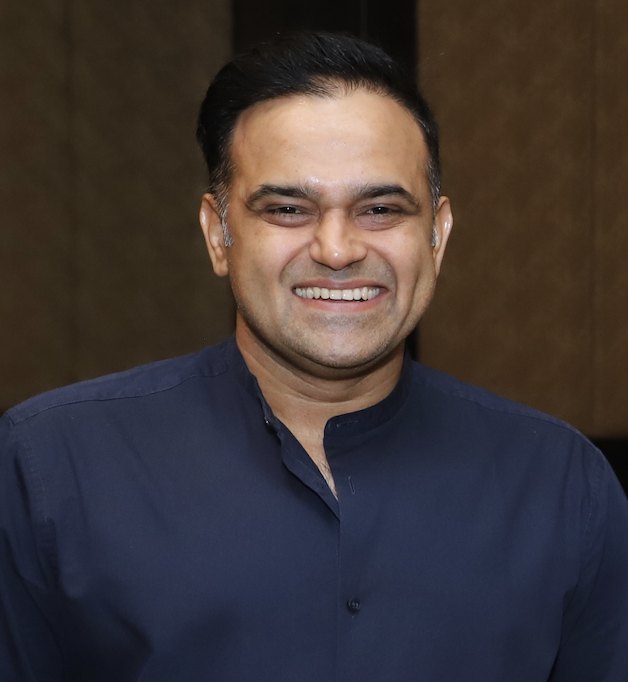
Every CAT cycle, one or two students in our cohort cross 99.9 percentile. They are not, on average, dramatically smarter than students who score 99.0. They are not putting in dramatically more hours. What they do differently is build a specific prep architecture from month one. This is the trajectory of Harsh Agrawal — IMS Indore CAT-25 cohort, 99.96 percentile, five IIM and B-school converts (IIM Bangalore, IIM Calcutta, IIM Kozhikode, SPJain, MDI Gurgaon).
The intent of this article is not hagiography. Harsh is a normal student who applied a specific set of disciplines consistently. The disciplines are the interesting part. What follows is a pattern analysis based on his prep trajectory through the IMS Indore programme — what the mock-data showed, what the mentor interventions were, and what specifically separated his approach from peers who finished in the 95–99 band.
Starting position — not extraordinary
Harsh started serious CAT prep with a profile that most cohort members would recognize. Engineering undergraduate background. Not from a tier-1 college. No prior CAT exposure. His first PreSimCAT (an early diagnostic) put him in the 88–90 percentile band — solidly above average, but well below the trajectory you’d associate with a future 99.96.
The students in our cohort who finished at 99+ rarely start at 99+. The starting position is a weak predictor. What matters is the slope — how the score progresses through the prep window — not the y-intercept.
Pattern 1 — Accuracy obsession from week one
The most distinctive thing about Harsh’s early prep was an obsessive focus on accuracy over attempts. His first 5 sectional mocks showed a clear pattern: he was attempting fewer questions than his peers but getting more of them right.
Specifically: where the cohort average for QA attempts was 16–18 questions per sectional with 70% accuracy, Harsh attempted 12–14 questions with 90% accuracy. His sectional score was the same or higher. The mentor team noticed this in mock review week 4 and confirmed the approach was deliberate — Harsh had decided early that accuracy was the constraint, not attempts. He would expand attempts only after locking 90%+ accuracy at a lower attempt count.
By month 4, he was attempting 17 questions with 88% accuracy. By month 6, 20 questions with 85% accuracy. The expansion was gradual, deliberate, and only happened after the previous accuracy floor was stable. Most aspirants do the opposite — they attempt 18 from week one at 65% accuracy and watch their score plateau.
Pattern 2 — Sectional balance over star sections
By mid-prep, most cohort members have a clear “strong” and “weak” section. Engineers tend to score 98 in QA and 88 in VARC. Non-engineers tend to score 96 in VARC and 90 in QA. Lopsided.
Harsh’s sectional profile by month 5 was 96 in QA, 96 in VARC, 95 in DI-LR. Balanced. The overall percentile he projected — 99 — was not the result of any single section dominating. It was the result of no section being weak.
The mentor intervention here was deliberate. Around mock 8, his QA percentile was 98 but VARC was 91. The natural impulse for an engineer-background aspirant is to push QA further. The mentor team pushed back — instead of growing QA from 98 to 99, the higher-EV move was growing VARC from 91 to 95. Harsh redirected effort. By mock 14, VARC was 96 and overall was 99+.
The pattern across our 99.9+ converts is the same. They are sectional-balanced. The lopsided 99-percentilers convert one or two IIMs. The balanced ones convert five or six. The full cohort data confirms this.
Pattern 3 — Every mock had a written analysis log
Harsh kept a single document through his prep — one page per mock, four sections per page: concept-gaps, execution-gaps, skip-analysis, time-pattern observations. The document grew to about 25 pages by the time he wrote CAT. He returned to it weekly.
The discipline was not unusual in our cohort — many students start a mock log. What was unusual was that Harsh kept it. Most aspirants log mocks 1–5 carefully, then stop logging by mock 8 because they feel they “know what they need to know.” The students who keep logging through mock 20 produce a different kind of compounding insight — they see patterns across 15+ mocks that single-mock review misses.
The single most useful page in Harsh’s log was a recurring “skill-error-frequency” table. After mock 5 he noticed that 40% of his QA errors involved misreading the question prompt under time pressure. He spent the next two weeks specifically practicing “read the question slowly first, solve fast second.” The error rate dropped to 12% by mock 8. The mock-analysis framework goes deeper on this discipline.
Pattern 4 — Mental conditioning, not just topic conditioning
From month 5 onward, Harsh started visualisation exercises — sitting down once a week, mentally walking through test-day from arrival to finish. The team had introduced him to the practice during a mentor session, drawing on Tony Xavier’s Mind over Matter framing.
The mock-to-test-day gap is real for most aspirants. The student who scores 99 in mocks often scores 96 on test day because the test-day mental state is different from the mock state. Visualisation practice closes that gap. Harsh’s final 4 mocks averaged 99.3 percentile. His test-day score was 99.96 — higher than his mock average. That direction (test-day above mock-day) is rare. It is what reliable mental conditioning produces.
A separate article goes deeper on the mental-conditioning framework. The short version is: rehearse the test mentally; treat anxiety as fuel; decouple identity from mock scores.
Pattern 5 — Application breadth — broader than the score required
At 99.96, Harsh could have applied to only IIM A/B/C and called it a strategy. He didn’t. He applied to roughly 10 schools, prepared the application material for each one specifically, and treated every interview as primary.
The result: 5 converts across IIM-B, IIM-C, IIM-K, SPJain, and MDI. The IIM-A interview didn’t convert — these things happen even at 99.96 — but because he had built a broader shortlist, his actual choice was “which of IIM-B/C/K to join,” not “do I have any options.” The A-B-C-or-nothing trap is exactly what broader shortlists avoid.
What this isn’t
A few honest caveats. Harsh is a single data point. The patterns above are what we’ve observed in his trajectory and in similar 99.9+ converts in past cohorts — but a single student is not a controlled experiment. Replicate the disciplines and your outcome will vary based on starting position, available hours, and exam-day variance.
The patterns also don’t add up to a magic formula. They add up to a prep architecture. Pick any one of them in isolation and you’ll improve marginally. Apply all five consistently across a year and the outcome shifts meaningfully — from 95 to 98, from 98 to 99.5, in some cases from 99 to 99.9.
The replicable part
If you read this hoping to find that 99.96 students have some unteachable advantage, you’ll be disappointed. The disciplines are entirely replicable. Accuracy obsession from week one. Sectional balance over star sections. Written mock log through every single mock. Mental conditioning starting month 5. Broader shortlist than your projected score requires.
We have students in the current cohort applying exactly this architecture. Two of them are projected to cross 99.5 in their final mocks. Whether they get to 99.9 will depend partly on exam-day variance — but the floor is already higher than it would be without the architecture.
Related: CAT-25 cohort patterns from 149 named students · How to analyse a CAT mock · Mental conditioning 99 vs 99.9.
Read next
Topper Stories
Eight IIM converts at 98.99 percentile: how Vaishnavi Goswami built her shortlist
Vaishnavi Goswami scored 98.99 percentile in CAT-25 and converted 8 IIMs — IIM-L, IIM-I, FMS Delhi, IIM Udaipur, IIM Raipur, IIM Amritsar, IIM Kashipur, IIM Trichy. The shortlist strategy that produced the conversions.
Topper Stories
CAT 2025 in numbers: the result patterns from 149 named Indore students
A breakdown of CAT-25 results from the IMS Indore + Bhopal cohort — 149 named call-getters, percentile distribution, which IIMs they were called by, what undergrad backgrounds, and what 90+ percentile actually buys.
CAT Strategy
Indore to IIM: why Madhya Pradesh produces more IIM converts than you would expect
You don't need to move to Delhi or Mumbai to crack CAT. 2,512 IIM calls in CAT-25 came from the IMS Indore + Bhopal centres alone. Why MP prep works, and what local students should know.