
Eight IIM converts at 98.99 percentile: how Vaishnavi Goswami built her shortlist
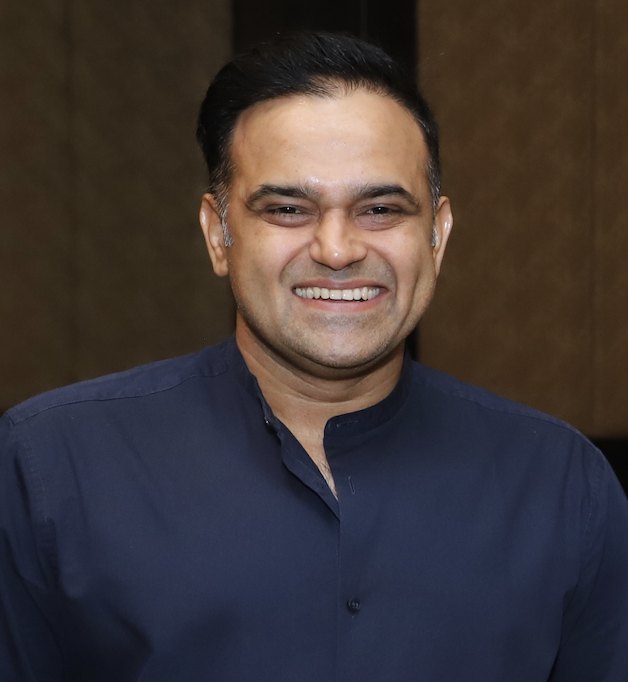
Vaishnavi Goswami scored 98.99 percentile in CAT 2025. She converted IIM Lucknow, IIM Indore, FMS Delhi, IIM Udaipur, IIM Raipur, IIM Amritsar, IIM Kashipur, and IIM Trichy. Eight IIM converts. Her percentile was below 99 — a number that, in the conventional CAT folklore, “isn’t enough.”
She is the cleanest single illustration of the principle that the article on A-B-C or Nothing argued in the abstract. A broader shortlist, applied to seriously, converts more IIMs than a narrow shortlist. The arithmetic is in front of you.
Why 98.99 was enough
Most aspirants would look at 98.99 and assume IIM-A/B/C are off the table. They would be roughly right — at that percentile, with a fresh undergrad profile, the call probability from the top three IIMs is low. The aspirant’s natural impulse is to be disappointed.
Vaishnavi’s alternative response — and this is the cohort pattern that matters — was: at 98.99, what IS in reach? The honest answer is a wide band. IIM-L converts students from 98.5+ when other factors align. IIM-I PGP regularly takes 97+ profiles. IIM-K from 97+. FMS from 98+. Newer IIMs from 95+.
She applied to 12 schools across these tiers. Eight gave her interview calls. Her shortlist was already a function of having approached CAT prep with the understanding that broad-shortlist is correct strategy, not consolation prize.
Principle 1 — Sectional balance enables shortlist breadth
Vaishnavi’s sectional profile was unusual for a 98.99 percentile. VARC: 99.1. DI-LR: 98.7. QA: 98.4. All three sections above 98. No section was a weakness.
This matters because different IIMs weight sections differently in selection. IIM-A weights VARC heavily for non-engineers. IIM-L looks at minimum 85+ percentile in every section as a hard floor. IIM-I gives meaningful weight to sectional balance. FMS — entirely percentile-driven but with a 90+ sectional requirement.
Aspirants with lopsided 99 percentile profiles — say, 99.9 in QA and 91 in VARC — get fewer total IIM calls than balanced 98s. The reason: their lopsided profiles trigger sectional-cutoff exclusions at many IIMs. Vaishnavi’s balanced 98.99 generated calls from eight IIMs precisely because no section was a deal-breaker.
Principle 2 — Treat every application as primary
Eight IIM call converts to eight IIM interviews. Most aspirants — even those who get multiple calls — prepare for the top calls and treat the rest as back-up. They write generic SOPs for the “lesser” IIMs. They prep less for those interviews. They walk into the interviews under-rehearsed.
The natural result: the “back-up” IIMs become real back-ups because the aspirant’s under-prep converts them at lower rates. The student who got 5 calls and treats 3 as primary converts 2. The student who treats all 5 as primary converts 4.
Vaishnavi’s approach to her eight calls was uniform. She prepared separate SOPs for IIM-L, IIM-I, FMS, and the new IIMs. She researched each programme’s specific curriculum, alumni profile, and recent placements. Her interview prep — through the IMS Indore GD-PI track — covered all eight schools with equal weight. She walked into each interview as if it were the only one.
She converted all eight. The conversion rate across 8 interviews is roughly the same as the conversion rate one student gets across 3 interviews if those 3 are treated as primary. The difference: 8 converts versus 2 converts.
Principle 3 — Interview prep started the week the calls came
Most aspirants treat the December–January window between CAT result and IIM interviews as a recovery period. They’re tired. They want a break. They wait until 10 days before their first interview to start prep.
That timing is too late for serious prep across 5+ interviews. The IIM-L interview happens, the student is rusty, they underperform. By the time they hit their stride at IIM-I three weeks later, two calls have been wasted.
Vaishnavi started interview prep the week her calls were announced — early January. By the time her first interview was scheduled (late February for IIM-Lucknow), she had completed roughly 8 mock interviews with the IMS Indore mentor team, covering all major interview types: stress, profile-deep-dive, current-affairs-heavy, technical (basic finance/economics).
Each mock interview was recorded and reviewed. By the time she sat for IIM-L, the interview process was familiar. Her first IIM-L interview wasn’t her first interview — it was her ninth. That difference matters enormously.
What Vaishnavi’s case doesn’t show
A few honest caveats.
Eight converts is a high number even with disciplined application. Most balanced 98–99 percentilers convert 4–6 IIMs, not 8. Vaishnavi’s profile had several specific strengths — academic consistency from 10th onward, demonstrated leadership in undergrad activities, clear career narrative — that boosted her conversion rate. Sectional balance enables shortlist breadth; profile coherence converts the calls.
The 98.99 itself was a year of disciplined prep. Vaishnavi’s mock trajectory through the prep year was a steady climb — from 91 percentile in early SimCATs to a 99.3 average in her last four. The score wasn’t accidental. It was the product of the same prep disciplines documented in the Harsh Agrawal trajectory article.
What this means for current aspirants
Three implications for anyone in prep:
One: Stop optimizing for a star section. Optimize for sectional balance. A balanced 98 converts more IIMs than a lopsided 99.5. The arithmetic is consistent.
Two: Apply broadly. If the threshold for a school is your projected percentile, the school is on your list. Don’t self-eliminate. Don’t treat any school as “just back-up” in your prep.
Three: Plan interview prep to start the week calls arrive. December–January is not a break. It is the prep window for a different test — the interview — which is half of the IIM admissions decision.
Related: A-B-C or Nothing · CAT-25 cohort patterns · The Harsh Agrawal trajectory.
Read next
Topper Stories
How a 99.96 percentile happens: the Harsh Agrawal trajectory
Harsh Agrawal scored 99.96 percentile in CAT-25 and converted IIM Bangalore, Calcutta, Kozhikode, SPJain, and MDI. What his trajectory through the IMS Indore programme reveals about the prep patterns that produce top-1% outcomes.
Topper Stories
CAT 2025 in numbers: the result patterns from 149 named Indore students
A breakdown of CAT-25 results from the IMS Indore + Bhopal cohort — 149 named call-getters, percentile distribution, which IIMs they were called by, what undergrad backgrounds, and what 90+ percentile actually buys.
B-Schools & IIMs
Old IIMs vs New IIMs: the ROI comparison that actually matters
A real ROI comparison across IIM-A through IIM-Sambalpur. Fees, placement averages, payback periods, and the under-reported factors that change which IIM gives the best return for which type of candidate.